
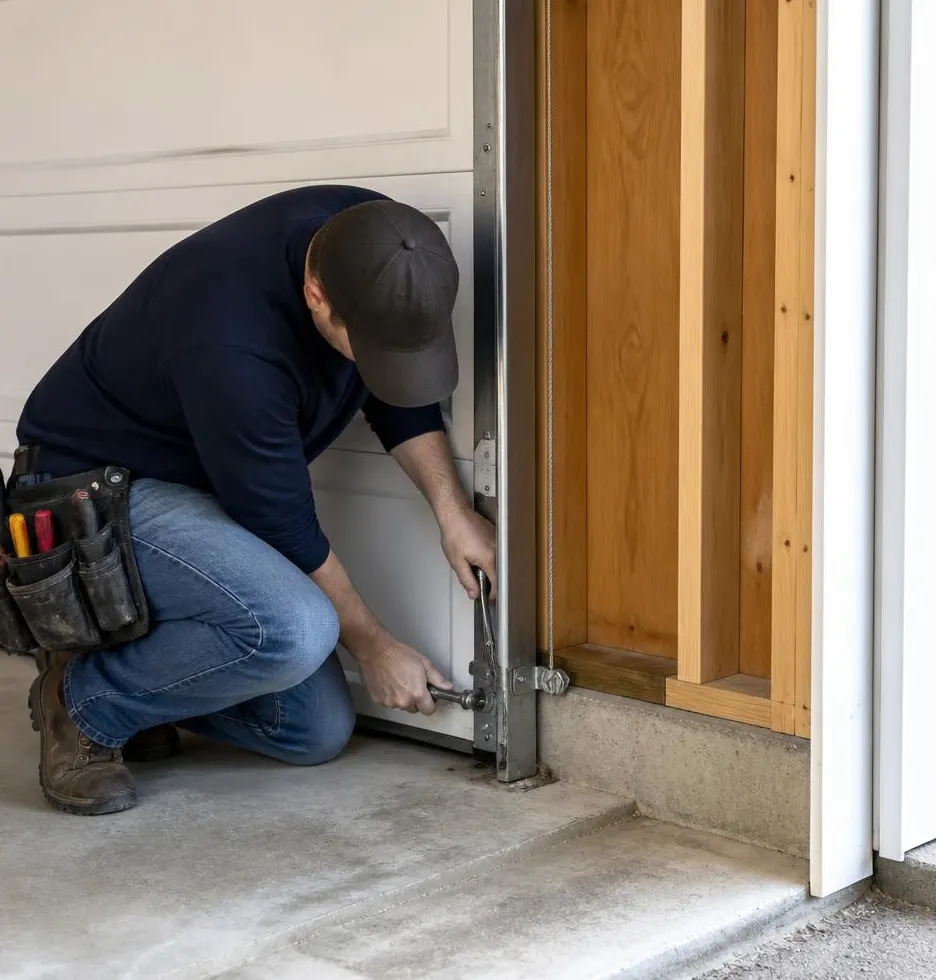
Put off this decision through one more hurricane season and here's what it costs: a wood door that swelled shut after a week of afternoon downpours, a steel panel rusting through at a ding nobody touched up, or an aluminum door that caved in the first time wind-blown debris hit it during a storm. None of these are rare calls. They're what happens when a door material gets matched to a showroom instead of to the climate it actually has to survive.
How Each Material Actually Behaves Here
Steel
Steel is the workhorse. A quality steel door with a baked-on finish resists swelling and holds up well to wind load when it's rated for it, which matters once storm season gusts start pushing on a wide garage opening. The weak point is the finish, not the metal: a chip from a bike pedal or a mower exposes bare steel, and in our humidity that spot starts rusting within a season if it's not touched up. Budget for a tube of matching touch-up paint and you've solved most of steel's downside.
Wood
Wood still looks the best on a traditional or craftsman-style home, and nothing else gives that same depth and grain. But humidity is wood's enemy. Panels absorb moisture in the summer swell, stick in their tracks, then shrink and crack when things dry out. Afternoon downpours pooling at the bottom panel will rot it over a few years if the slab doesn't drain away from the door. Wood needs re-sealing or repainting more often here than in a drier climate, and skipping that maintenance is the single fastest way to end up replacing panels early.
Aluminum
Aluminum won't rust, which makes it appealing anywhere humidity is a factor. It's also light, which is a double-edged trait: easier on an opener's motor, but easier for storm wind to flex and for hail or flying debris to dent. Unreinforced aluminum doors generally carry lower wind-load ratings than steel, so if you're on a lot that catches a lot of wind, this is worth weighing carefully.
Fiberglass
Fiberglass is built to mimic wood's look while shrugging off moisture and rust. It holds up well in humidity and won't rot. The trade-off shows up with age and impact: panels can get brittle after years of sun exposure, and a hard knock from debris can crack a thin panel rather than just dent it the way steel would. Fading is also more noticeable on fiberglass over time than on a factory-coated steel door.
Composite
Composite doors (wood fiber and polymer blends) are the newer option and they split the difference well. They resist moisture and won't attract termites the way raw wood can, they hold paint and stain better over time than fiberglass, and they don't rust. The downside is upfront cost, which typically runs higher than steel or aluminum.
Side-by-Side on What Matters Here
- Humidity and rust/rot resistance: fiberglass and composite best, steel good if the finish stays intact, wood weakest without regular upkeep
- Wind-load performance: steel and reinforced composite typically strongest, aluminum weakest unless reinforced
- Impact resistance (storm debris): steel holds up best, aluminum dents easily, fiberglass can crack
- Maintenance required: wood needs the most (resealing, repainting), steel needs occasional touch-up, fiberglass and composite need the least
- Upfront cost (national ranges): steel is usually the most affordable, aluminum similar, fiberglass mid-range, wood and composite typically the highest
- Curb appeal: wood wins outright, composite and fiberglass come close without the upkeep, steel is fine but plainer unless it has a wood-look finish
What We'd Recommend for Most Homes Here
For the typical attached-garage home dealing with hot, humid summers, heavy afternoon storms, and real wind gusts during storm season, a wind-rated steel door with a polyurethane-insulated core and a factory finish is the most practical choice. It handles moisture better than wood without the upkeep, holds up to wind load better than aluminum, and resists impact better than fiberglass. If curb appeal is the priority and budget allows, a composite door gets you the wood look with far less seasonal maintenance. Wood still makes sense if you're committed to refinishing it on a schedule, but it's not a low-maintenance choice in this climate, and it never will be.
When to Call Birmingham Garage Door Service
If you're seeing rust bubbling at panel edges, a wood door that's sticking or showing soft spots at the bottom, or a door that's taken visible wind or hail damage, don't wait for it to get worse before the next storm rolls through. We handle panel replacement when only part of the door needs attention, and full garage door installation when it's time to start over with a material built for what this climate actually throws at it. We'll look at your opening, your exposure, and your budget, and recommend a door that will actually hold up rather than one that just looks good on day one.
If your garage door in Birmingham, Trussville, Center Point, or anywhere nearby is showing its age, call Birmingham Garage Door Service today and we'll get you a straight answer and a door built for the next ten storm seasons, not just this one.